

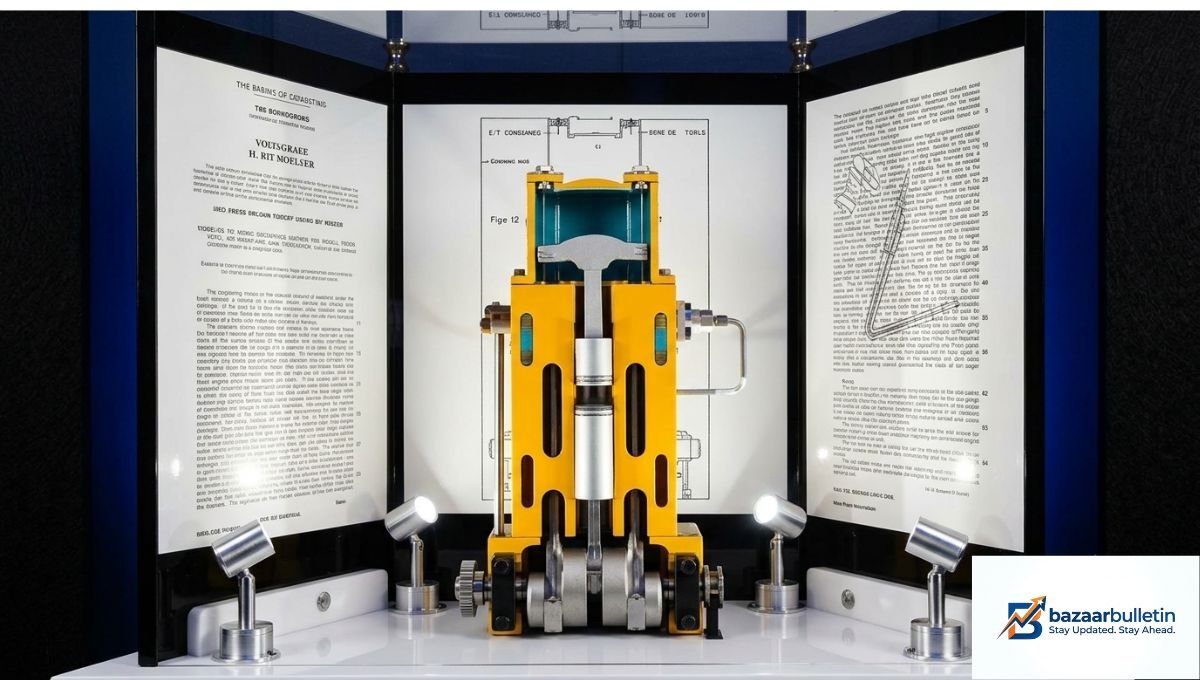
 Anand Mahindra has shared an interesting story about his grandfather, J.C. Mahindra, and a century-old engine design. A team at Mahindra Research Valley in Chennai has successfully rebuilt and fired up a working version of an engine patented by J.C. Mahindra in 1918.
The project has brought a remarkable piece of engineering history back to life more than 100 years after the original design was created.
Anand Mahindra Reveals His Grandfather’s 1918 Engine Patent
Anand Mahindra had previously shared the story of his grandfather’s 1918 patent for a two-cycle, opposed-piston engine designed to run on crude oil.
At the time, he believed the story had ended with the discovery of the historic patent. However, engineers at Mahindra Research Valley decided to take a closer look at the old design and explore whether the engine could actually be rebuilt.
The patent documents were discovered while Mahindra’s archives were being organised. Vaidehi Mayekar, a senior manager involved in the archive work, found documents related to the patent and brought them to the company’s attention.
Mahindra Research Valley Rebuilds the 108-Year-Old Engine
Instead of simply preserving the patent as a historical document, the research team decided to study the original drawings and recreate the engine.
The project became a unique engineering challenge. The team carefully interpreted the century-old drawings, manufactured the required components and assembled a working model based on J.C. Mahindra’s original design.
The engine was eventually fired up on Founders’ Day, turning a historic patent into a functioning piece of engineering.
Anand Mahindra Highlights the Importance of Innovation
Anand Mahindra appreciated the team’s efforts and said the project represented much more than nostalgia or a look into the past.
The rebuilt engine reflects the spirit of innovation and creativity associated with the company’s founders. Mahindra encouraged engineers and innovators across the Mahindra Group to continue experimenting, developing new ideas and building practical solutions.
He said that continuing this culture of experimentation would be an appropriate way to honour the company’s founders.
How a Century-Old Design Inspired Modern Engineers
The project also demonstrates how historical engineering ideas can still provide inspiration in the modern era.
Although the original design dates back to 1918, today’s engineers were able to study the drawings and recreate the concept using modern engineering knowledge, manufacturing techniques and tools.
The project shows that old designs can sometimes offer valuable lessons for today’s engineers and innovators.
Six months ago, I shared the story of a patent filed by my grandfather, J.C. Mahindra, in 1918, for a two-cycle, opposed-piston engine designed to run on crude oil.
I thought that was where the story ended.
Clearly, the team at Mahindra Research Valley in Chennai had other ideas!
As a labour of love, they decided to go back to that 108-year-old patent, interpret the drawings & actually build a working prototype of J.C.’s engine.
And on Founders’ Day, they unveiled it & fired it up.
I cannot adequately express my gratitude to the team that brought a piece of our history back to life.
But more than nostalgia, I hope this engine serves as a reminder to every engineer and innovator across the Mahindra Group.
J.C. Mahindra was, as my father and uncle used to describe him, a “tinkerer.”
May we never stop tinkering.
May we never stop imagining, experimenting & building.
That would be the best tribute we could pay to our founders.
— anand mahindra (@anandmahindra) October 6, 2026
Who Was J.C. Mahindra?
J.C. Mahindra was an engineer who studied at Veermata Jijabai Technological Institute (VJTI) in Mumbai.
He worked in the steel industry, including at Tata Steel. During World War II, he served as India’s first Iron and Steel Controller.
His experience and connections in the steel industry helped him and his brother, K.C. Mahindra, establish a trading business. The business later expanded into manufacturing and became associated with products such as Willys Jeeps and International Harvester tractors in India.
Social Media Users React to the Rebuilt Engine
The story of the rebuilt engine attracted considerable attention on social media.
Many users were surprised that engineers could take a design from 1918 and turn it into a working engine more than a century later. Some users also joked about how difficult it can be to get much newer technology to work properly.
Others praised the engineering achievement and described the engine’s design as remarkably advanced for its time, particularly its two-cycle opposed-piston configuration and ability to run on crude oil.
A 1918 Patent Comes Back to Life
The rebuilt engine has become more than just a historical curiosity. It represents a connection between India’s industrial past and modern engineering.
The project shows how engineering knowledge can survive across generations and inspire new ideas long after the original design was created.
What began as a forgotten patent in an archive eventually became a working engine more than 100 years later.
For Anand Mahindra, the story serves as a reminder that innovation often begins with curiosity, experimentation and the courage to explore ideas that others may overlook.

 By
By