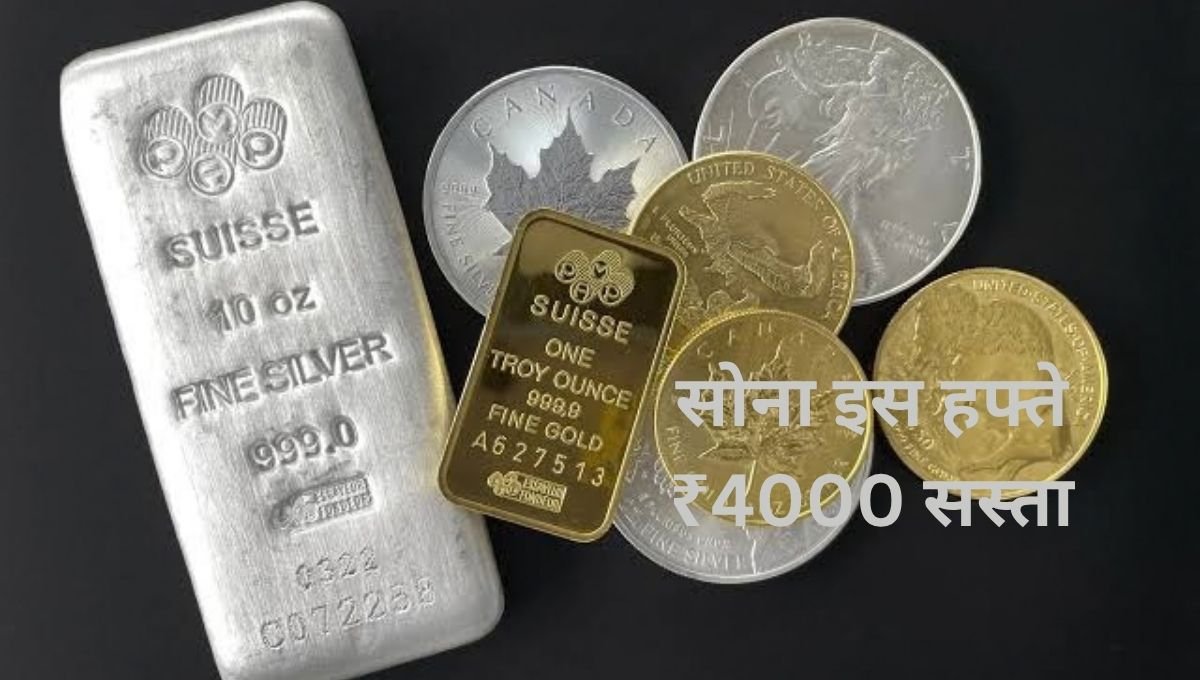

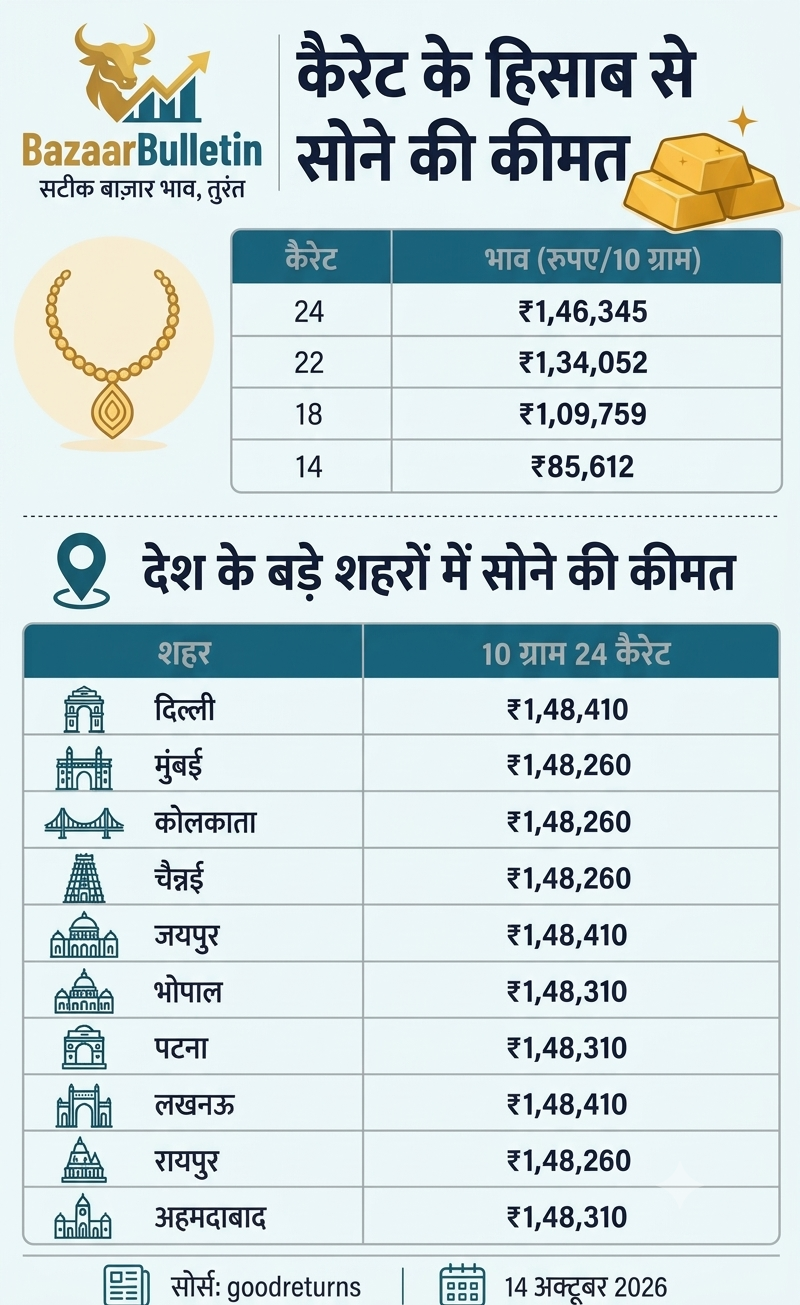
 Gold and silver prices declined for the third consecutive day on October 14, according to the India Bullion and Jewellers Association (IBJA). The price of 24-carat gold fell by ₹1,272 per 10 grams to approximately ₹1.46 lakh.
Silver prices also recorded a sharp decline. The price of one kilogram of silver dropped by ₹4,646 to around ₹2.20 lakh. Over the past three days, gold has become cheaper by approximately ₹3,000, while silver prices have fallen by around ₹6,000.
These declines have drawn attention from buyers and investors who are tracking precious metal prices amid changing global economic conditions.
Gold Falls by ₹8,000 and Silver by ₹15,000 in September
Gold and silver prices also experienced a significant correction in September.
According to the figures provided, gold was priced at approximately ₹1.56 lakh per 10 grams on August 31. By September 30, its price had declined to around ₹1.48 lakh.
Silver prices followed a similar trend. The price of one kilogram fell from approximately ₹2.37 lakh to ₹2.22 lakh during the same period.
These movements highlight the volatility in the precious metals market. However, past price declines do not necessarily indicate that gold and silver will continue to become cheaper.
Will Gold and Silver Prices Continue to Fall?
Gold and silver prices may remain volatile as investors respond to interest rate expectations, geopolitical developments, currency movements, and global economic uncertainty.
Several factors could influence their next move.
1. US Federal Reserve Interest Rate Decisions
Changes in US interest rates can affect gold prices because gold does not pay interest. When interest rates or bond yields rise, some investors may prefer interest-bearing assets over gold.
However, the Federal Reserve’s interest rate decisions should be verified against official announcements before attributing the latest price decline to a particular policy change.
2. Geopolitical Tensions and Economic Uncertainty
International conflicts and concerns about economic stability can increase demand for gold as a potential safe-haven asset.
If geopolitical risks increase, investors may turn to gold for protection against uncertainty. Nevertheless, gold prices can also decline during periods of global tension, depending on interest rates, the US dollar, and investor positioning.
3. Market Volatility May Create Buying Opportunities
The recent decline may attract buyers looking to purchase gold or silver at lower prices. However, a fall in prices does not guarantee an immediate recovery.
Investors should consider their financial goals, risk tolerance, and investment horizon before making a decision. Tracking international prices, currency movements, and domestic market rates can also help them understand price changes.
Two Important Things to Check Before Buying Gold
Before purchasing gold jewellery or coins, buyers should keep the following points in mind.
1. Always Buy Hallmarked Gold
Choose gold jewellery carrying the appropriate Bureau of Indian Standards (BIS) hallmark. Check the hallmark details and verify the purity information through the applicable official verification system.
Hallmarking helps buyers confirm the declared purity of gold and reduces the risk of purchasing jewellery that does not meet the stated standard.
2. Compare Gold Prices Before Purchasing
Check gold prices from reliable sources, including the IBJA website and local jewellers.
Remember that 24-carat, 22-carat, and 18-carat gold have different purity levels and prices. The final jewellery bill may also include making charges, applicable taxes, and other disclosed costs.
Comparing prices and checking the weight and purity details can help you make a more informed purchase.
Four Ways to Check Silver Purity
Buyers should be careful when purchasing silver because simple home tests cannot conclusively establish its purity.
1. Magnet Test
Silver is generally not attracted to an ordinary magnet. However, this test alone cannot confirm whether an item is genuine silver because several other metals also show little or no magnetic attraction.
2. Ice Test
Silver conducts heat very efficiently, so ice may melt relatively quickly when placed on genuine silver. However, the result depends on several factors and should not be treated as definitive proof of purity.
3. Smell Test
Pure silver generally has no strong metallic smell. However, the absence or presence of an odour is not a reliable way to establish silver purity.
4. Cloth Test
Rubbing silver with a suitable polishing cloth may reveal dark tarnish. However, tarnishing alone does not prove that an item is genuine silver, and genuine silver does not always leave a visible mark.
For greater confidence, purchase silver from a reputable seller and ask for a proper bill and purity documentation. Professional testing is more reliable than home-based methods.
Conclusion
Gold and silver prices declined for the third consecutive day on October 14, with 24-carat gold falling to approximately ₹1.46 lakh per 10 grams and silver dropping to around ₹2.20 lakh per kilogram, according to the supplied IBJA figures.
Although lower prices may interest jewellery buyers and investors, precious metals can remain volatile. Before purchasing, compare current rates, check purity certification, and avoid making decisions based solely on short-term price movements.
Disclaimer: This article is for informational purposes only and does not constitute investment advice. Gold and silver prices fluctuate with market conditions. Verify the latest rates with IBJA and reputable local dealers before making a purchase.

 By
By